
Blogs
What is friable asbestos, and why it is treated differently
Friable asbestos is material that can be crumbled or reduced to powder by hand pressure when dry. That one characteristic pulls in Class A licensing, air monitoring and a clearance certificate, whatever the quantity. Max Demolition and Excavation confirms the scope after a formal site inspection and assessment.
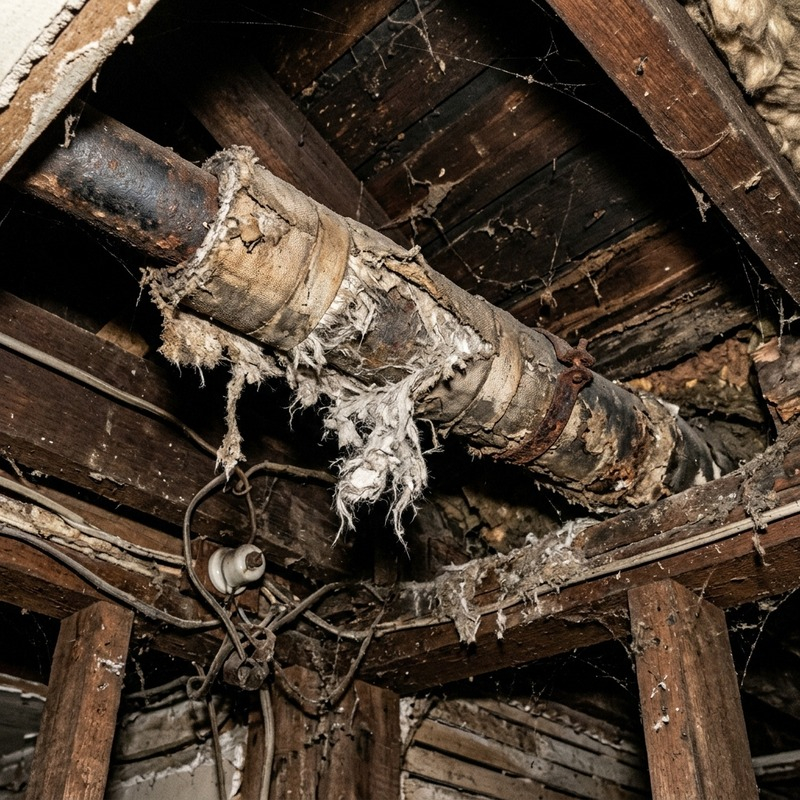
Friable asbestos is asbestos containing material that is in poor condition or so loosely bound that it can be crumbled, pulverised or reduced to powder by hand pressure when it is dry. That one characteristic, how easily the material falls apart, is the reason friable material sits in its own regulatory category in New South Wales and the reason it is never treated as an ordinary building material. Most of the people who ask me what is friable asbestos have just pulled up old flooring, opened a wall cavity or lifted a ceiling hatch and found something they were not expecting, so this article sets out what the term means, how it differs from bonded asbestos, and what the process looks like once friable material is suspected. Where it is confirmed, the work sits with a licence holder, which is why it falls under licensed friable asbestos removal in Sydney rather than anything a property owner takes on.
What the word friable actually means
The NSW Government asbestos information service draws the line between two categories. Non friable asbestos, often called bonded asbestos, has its fibres held firmly in a cement or resin binder. Friable asbestos either never had a solid binder in the first place, or has lost it. In practical regulatory terms, friable material is asbestos that can be reduced to powder by hand pressure when dry.
That is a definition regulators use to classify material. It is not an instruction. Nobody should be pressing, breaking or testing a suspect material to find out which category it falls into, because the act of testing it is the act of disturbing it. Classification is a job for a qualified assessor working to the framework SafeWork NSW sets out.
Condition matters as much as the original product
A material does not have to have started life as loose fibre to be assessed as friable. SafeWork NSW guidance recognises that bonded material which has been badly weathered, water damaged, fire affected, crushed or mechanically abraded can deteriorate to the point where it no longer behaves as bonded material.
This is why two sheets of the same product on the same property can attract different controls. One may be intact and stable, the other may have spent twenty years under a leaking gutter. Condition is assessed as it is found, not assumed from the product type.
Why the distinction carries so much weight
Every control in the NSW framework is built around one hazard, airborne fibre. Material with its fibres locked into a solid matrix releases very little while it is left undamaged. Material that is loose, powdery or crumbling can release fibre with very little disturbance, including from air movement, vibration or foot traffic nearby.
That is the whole reason the two categories are regulated differently. SafeWork NSW requires a higher level of control for friable work, including stricter containment, specific respiratory protection, a documented safe work method statement, notification before work begins, and air monitoring carried out while the work is underway. None of that is optional or scalable down for a small area. Under the SafeWork NSW framework, the friable category applies regardless of how little of the material is present.
Side by side
Bonded and friable: two different jobs
The same fibre, two regulatory categories. The table sets out where the two part company once a material has been assessed.
| Factor | Bonded, or non friable | Friable |
|---|---|---|
| The binder | Fibres held firmly in a cement or resin matrix. | Never had a solid binder, or has lost it through damage or weathering. |
| Behaviour when dry | Stays intact under hand pressure while undamaged. | Can be crumbled, pulverised or reduced to powder by hand pressure. |
| Fibre release | Very little while the material is left undisturbed. | Can release fibre from air movement, vibration or foot traffic nearby. |
| Licence required | At least a Class B licence above the SafeWork NSW threshold. | A Class A licence, with no quantity small enough to fall outside it. |
| Air monitoring | Not required as a standard control. | Carried out during the work by a licensed asbestos assessor engaged independently. |
| Clearance | Clearance follows the scope of the removal. | The area is not returned to normal use until a clearance certificate has been issued. |
| Typical materials | Sheeting, eaves and wet area linings. | Loose fill insulation, pipe lagging, sprayed coatings and low density board. |
Nothing in that table can be applied by eye. Which column a material sits in is established by sampling and laboratory analysis, and by an assessment of the condition the material is actually in.
Materials the NSW guidance identifies as friable
The NSW Government asbestos information service names a consistent set of materials in the friable category. The ones that come up most often in older housing and commercial buildings are:
- Loose fill insulation in roof spaces and wall cavities.
- Pipe lagging on hot water and heating pipework.
- Asbestos rope used as a seal or gasket material.
- Sprayed fire retardant coatings on structural steel and ceilings.
- Low density asbestos board, sometimes used as insulating board or heater panels.
- The backing on some old vinyl floor coverings.
Seeing something on that list does not confirm what you have. These are the material categories that have historically been found to be friable, not a way of identifying a specific product in front of you.
You cannot identify asbestos by looking at it
This is the most important point here. Asbestos cannot be reliably identified by sight. No colour, texture, pattern or age cue confirms or rules it out, and asbestos containing products look close enough to their modern replacements that even experienced trades do not call it by eye. The only way to know is laboratory analysis of a sample taken under controlled conditions by a competent person, with the analysis done by an accredited laboratory.
That is why the first step on any older property is assessment rather than guesswork, and why arranging asbestos inspections and sample testing before work starts is standard practice on pre 1990 buildings. If a material is unidentified, the sensible position is to treat it as though it may contain asbestos, leave it undisturbed, and get it assessed.
What happens procedurally when friable asbestos is suspected
Once friable material is suspected, the job changes character. It stops being something a property owner or a general trade can proceed with and becomes licensed work under the SafeWork NSW regime.
Friable asbestos removal requires a Class A asbestos removal licence issued by SafeWork NSW. A Class B licence, which covers non friable removal above the threshold SafeWork NSW sets, does not extend to friable material. SafeWork NSW applies the Class A requirement irrespective of quantity, so there is no amount of friable asbestos small enough to fall outside it and no such thing as a minor friable job.
For Class A work, SafeWork NSW also requires that a licensed asbestos assessor is engaged independently of the removal. The assessor carries out air monitoring during the work and issues a clearance certificate afterwards. The area is not returned to normal use until that clearance certificate has been issued. Securing air monitoring and clearance certificates is part of the compliance chain for the work, not an optional add on, and the paperwork is what demonstrates the area has been cleared.
The waste side is governed separately. The NSW Environment Protection Authority sets how asbestos waste is classified, how it must be transported and which facilities are lawfully able to receive it. Those requirements apply to the licensed contractor handling the material.
Where approvals sit alongside the asbestos work
Asbestos clearance and planning approval are separate tracks that often run at the same time. Whether a demolition or renovation proceeds as complying development or needs full development consent is determined under the planning framework administered by the NSW Department of Planning, Housing and Infrastructure, and the relevant local council deals with the site specific approvals and conditions that attach to your address. Neither pathway substitutes for the SafeWork NSW licensing and clearance obligations.
What all of this means in practice is that the scope of friable asbestos work is confirmed at a formal site inspection and assessment, not estimated from a description over the phone. Until the material has been assessed and the extent established, there is no reliable way to say what the work involves.
Common questions
Frequently asked questions
The questions we are asked most often when someone has found material they were not expecting.
Is friable asbestos hazardous?
When was asbestos banned in Australia?
Is fibre cement asbestos?
Final thoughts
Friable is a condition rather than a product. It describes material that can be reduced to powder by hand pressure when dry, whether it started life that way or got there through twenty years of weather, and that single characteristic is what pulls in Class A licensing, air monitoring and a clearance certificate regardless of how little of it there is. None of that can be judged by looking, which is why the sensible response to anything unidentified is to leave it alone and have it assessed.
Max Demolition and Excavation is a licensed demolition, excavation and asbestos contractor based in Auburn NSW, operating under NSW licence AD214737 with more than five years in business. If you have found material you are unsure about on a property in Sydney, leave it alone and get in touch with our team to arrange a formal site inspection and assessment.
Friable asbestos
Found something you are not sure about
Leave it undisturbed and send us the address. We will arrange a formal site inspection and assessment before anything is touched.
- Demolition licence AD214737, issued by SafeWork NSW
- Priced after a formal site inspection, never from an address alone
- Demolition, asbestos, clearing, excavation and cartage on one contract